Northern California · A cause we care about
The kelp forests are disappearing.
Off our coast, underwater forests as rich as redwoods fed abalone, fish, and a whole way of life. In a few short years, most of them collapsed. Here's what happened, and how we bring them back.
What happened
A forest, gone in a few years
- Before 2014A thriving forest
Bull kelp blanketed the coast, food and shelter for abalone, fish, and otters.
- 2014–2016"The Blob"
A record marine heatwave and a strong El Niño warmed the water far beyond normal.
- 2014The sea stars vanish
Sea-star wasting disease wiped out the sunflower star, the main predator that kept urchins in check. Its cause wasn't pinned down until 2025: a bacterium called Vibrio pectenicida.
- 2014–2019Urchin barrens
With no predator and warm water, purple urchins exploded ~60× and mowed the kelp down to bare rock.
- TodayMore than 90% gone
Across hundreds of miles of coast, much of the forest still hasn't come back.
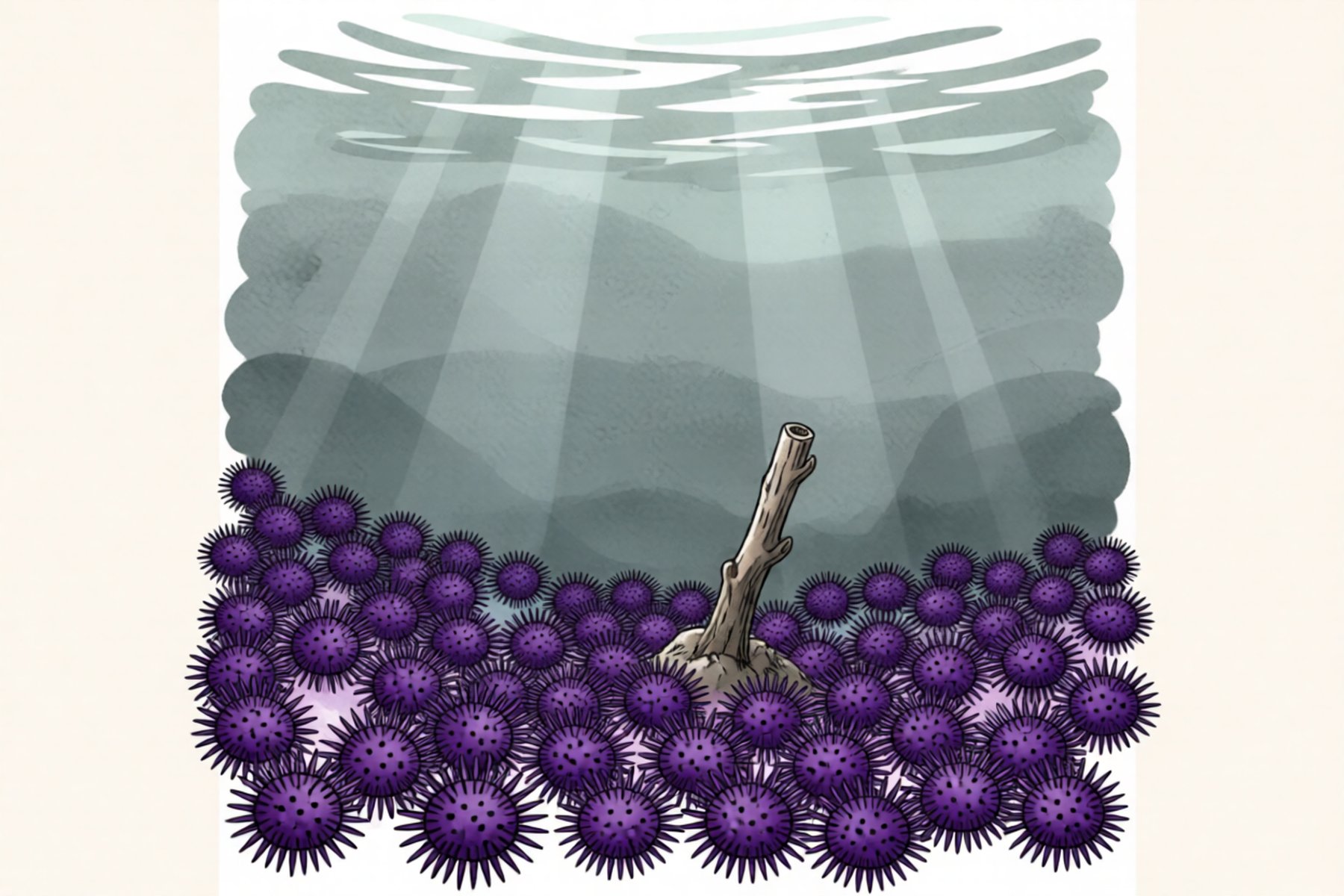
An "urchin barren": purple urchins blanket the rock where a kelp forest once stood.
Why it matters
The abalone, and a way of life
Kelp is what red abalone eat. As the forests vanished, the abalone starved. California's recreational abalone fishery, a generations-old tradition on the Mendocino and Sonoma coasts, has been closed since 2018, and in late 2025 the state extended that closure through 2036. Free-diving for abalone and spearfishing aren't just hobbies here. They get handed down, parent to child.
I grew up diving this coast with my brother, for abalone, for fish, to see all the beauty under the sea. I don't want to be of the last generation to dive amongst the kelp forests. John E. Naulty Jr., Mendo-Sea-Know
Signs of hope
It can come back
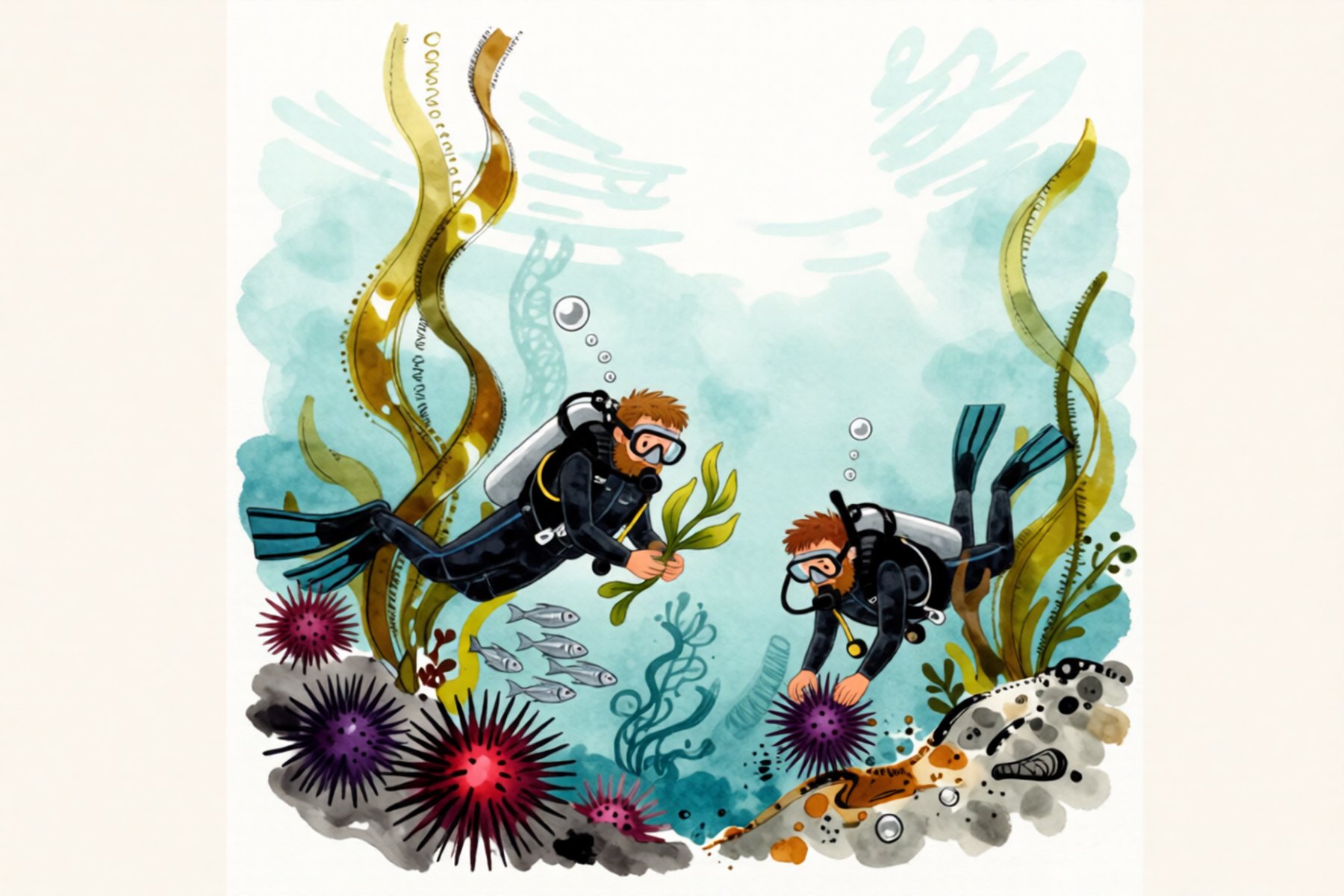
People are fighting for the kelp, and in places, it's working.
- Divers remove purple urchins from key sites so kelp can re-seed.
- Conservation groups are breeding sunflower sea stars and banking bull-kelp spores to replant the forest (The Nature Conservancy).
- The state runs an official Kelp Restoration & Management Plan.
Watch
The Last Forests Project
A feature documentary that goes below the surface to witness Northern California's kelp forests, and the quiet collapse facing them, through the lives of urchin divers, scientists, and ocean-goers.
Watch the full film · thelastforestsproject.comHow you can help
From your coast to the whole ocean
Around Mendocino
- Back the Noyo Center for Marine Science. Visit, volunteer, or give.
- Train as a Reef Check volunteer diver to remove urchins & survey reefs.
- Choose purple uni from local divers. It eases the barrens.
- Take a kid tide-pooling; shop local ocean events.
California
- Support CA Sea Grant research & the state's kelp plan.
- Back The Nature Conservancy's sea-star breeding & spore bank.
- Tell the Fish & Game Commission kelp & abalone recovery matters.
- Respect the abalone closure so the stock can rebuild.
Around the world
- Act on climate. Warming oceans drive the heatwaves that kill kelp.
- Join the Kelp Forest Alliance (4M hectares by 2040).
- Eat sustainable seafood (Seafood Watch).
- Cut plastic, and spread the word.
Places to help
Organizations on the front line
Give
Fund the science and the restoration dives.
Dive & volunteer
Get in the water (or help those who do).
Learn & act
Go deeper and spread the word.
This is why A Medicine of the Sea exists: to help a new generation fall in love with the ocean, and to help bring the forests back. Children who love the sea grow up to fight for it.
Sources
Every fact above is drawn from peer-reviewed research and public agencies:
- Collapse, >90% bull-kelp loss (~350 km), the 2014–2016 heatwave, and the ~60× urchin increase: Rogers-Bennett & Catton, "Marine heatwave and multiple stressors tip bull kelp forest to sea urchin barrens," Scientific Reports (2019).
- Cause of sea-star wasting disease (the bacterium Vibrio pectenicida): Prentice et al., Nature Ecology & Evolution (2025); coverage via UW News; outbreak tracking by MARINe (UC Santa Cruz).
- ~96% North-Coast kelp loss, sunflower-sea-star captive breeding, and the bull-kelp spore bank: The Nature Conservancy, California Oceans Program.
- Red-abalone fishery closure (2018) and its 2025 extension through 2036: California Dept. of Fish & Wildlife: the closure-extension announcement and the Red Abalone Fishery Management Plan.
- Big River's documented kelp comeback: California Sea Grant.